The seating plan is the part of wedding planning that couples put off longest and guests notice most. Where someone sits decides who they talk to for several hours, which makes it one of the few planning decisions that directly shapes how the evening feels.
Wait for the RSVPs, then move quickly
There is no point drafting a plan before you know who is coming. Once your RSVP date passes, chase the stragglers within a week and then start. Leaving the plan until the final fortnight guarantees it will be done under pressure.
Confirm the table sizes and shapes with your venue first. A round table of ten seats conversation differently from a long table of twenty. Round tables create one group; long tables create several smaller ones along their length.
Seat people in clusters, not pairs
The common mistake is placing couples together and stopping there. Think in groups of four to six instead. Every guest should be able to reach an easy conversation without leaning across the table.
Give each table a reason to exist. University friends, the cousins, colleagues who already socialise. A table of strangers with nothing in common is the one people leave early.
Place the people who will carry the room
Some guests are naturally good at including others. Spread them out rather than seating them together, particularly on tables that contain someone who will not know many people.
Put anyone attending alone beside someone warm and talkative. It is a small decision that changes their entire night.
Handle the difficult combinations deliberately
Divorced parents, estranged relatives, former colleagues who no longer speak. Separate them by sightline rather than distance alone, so neither party spends the meal watching the other. Do not seat them at adjacent tables and hope.
If a combination is genuinely fraught, speak to the people involved before the day. Most adults respond well to being told quietly what the arrangement will be.
Consider access and comfort
Older guests should be away from speakers and close to the exit and the bathrooms. Anyone with mobility needs should have a clear path rather than a route between chairs. Children are usually happiest together, seated near their parents but not necessarily beside them.
Keep the head table or sweetheart table visible to the room. Guests want to be able to see you, and many will not get another chance all night.
Make the plan easy to read
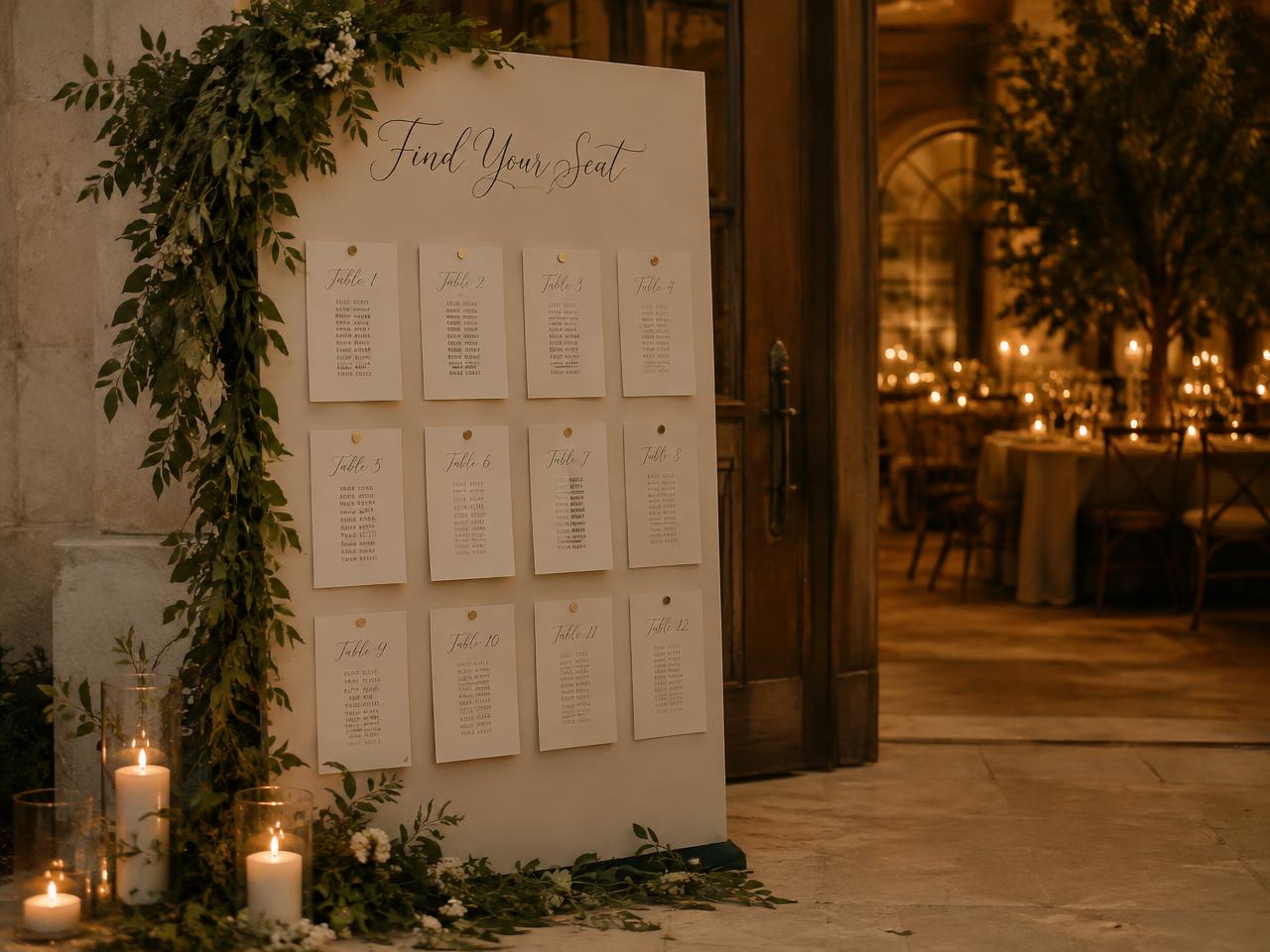
A seating chart at the entrance should be alphabetical by surname, not grouped by table. Guests look for their own name first. Table names are a lovely detail but they slow people down unless the chart is clear.
Give your venue and coordinator a copy in advance, and bring a printed version yourself.
Expect to change it
Someone will cancel in the final week. Build the plan so that removing two people does not collapse a table. Leaving one or two flexible seats is easier than reworking the whole room on the Thursday.
The part that actually matters
A good seating plan is not about protocol. It is about deciding, quite deliberately, who you want each guest to spend the evening with, and whether they will feel like they were considered.
Guests rarely comment on a seating plan that works. They simply enjoy themselves and leave saying it was a great night. That is the whole point. Our piece on the small details guests actually remember covers the same idea from the other direction.