Writing your own vows is one of the few parts of a wedding that cannot be delegated. A planner cannot draft them for you and a template will always sound slightly borrowed. What follows is a way to approach them that most people find manageable.
Agree on the format first
Before either of you writes a word, agree on three things with your partner: roughly how long the vows will be, how personal they will get and whether humour is welcome. Mismatched vows are uncomfortable for everyone. One partner delivering three minutes of heartfelt reflection after ninety seconds of jokes creates an imbalance that the room can feel.
A useful target is between one and two minutes each, which is roughly 150 to 250 words.
Gather material before you write
Do not start with a blank page. Spend twenty minutes answering these questions honestly.
When did you know this was different from anything before it? What does your partner do that makes ordinary days better? What have you been through together that changed you? What are you actually promising for the years ahead?
Your vows already exist inside those answers. The writing is mostly selection.
A structure that holds up
Strong vows tend to move through four stages.
First, a short opening that grounds the moment. Second, something specific about who your partner is, using detail rather than adjectives. Third, the promises themselves. Fourth, a closing line that looks forward.
Specificity is what separates memorable vows from pleasant ones. "You are kind" is forgettable. "You make tea for people before they know they need it" is not.
Write promises you can keep
The best promises are ordinary and achievable. Promise to keep asking how their day was and to listen to the answer. Promise to be honest when something is wrong rather than waiting until it becomes larger. Promise to keep making time for the people who matter to both of you.
Grand promises about never arguing or loving someone endlessly age poorly. Small, concrete promises are the ones people remember and actually live by.
Read them aloud before the day
Vows are written to be spoken, so test them out loud. Anything you stumble over on the third read will be worse in front of a hundred people. Shorten long sentences. Cut clauses. Replace any word you would not normally use.
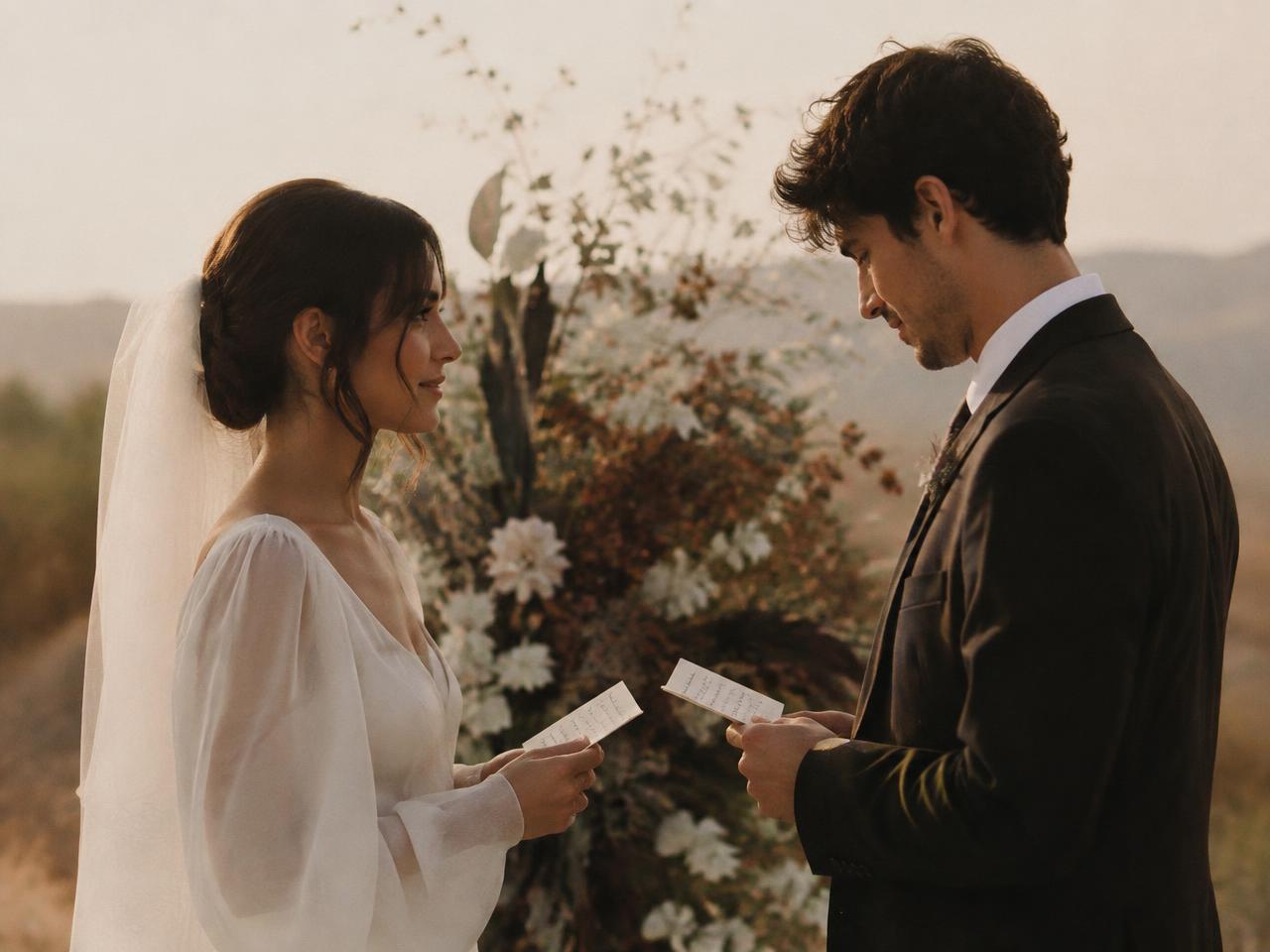
Print them on a card rather than reading from a phone. Hands shake, screens dim and the photographs look better.
On crying
You may cry. Most people do. Pause, breathe, and keep going. Nobody in the room minds and nobody is timing you. If you are worried about it, place the most emotional line in the middle rather than at the very end so you finish steadily.
What to leave out
Avoid inside references that only two people understand, long stories that need setting up, and anything about past relationships. Avoid apologising for your writing. Avoid a list so long that it loses shape.
The part people underestimate
Vows are spoken to one person but heard by everyone. Guests often say afterwards that the vows were the part of the day that stayed with them, because it was the moment the celebration stopped being an event and became two people saying something true in front of the people they love.
That is worth protecting. Write them early, keep them honest and resist the urge to perform.